by Abdulaziz H. Abuzinada
Pictures by NCWCD/Pambour & NCWCD/Rancinan
The location of the Kingdom of Saudi Arabia at the intersection
of three biogeographic  regions gives its vast landscape a striking diversity of habitats, supporting a rich assemblage of animals and plants. In order to oversee the conservation and development of this rich and varied natural heritage the National Commission for Wildlife Conservation and Development (NCWCD) was established in 1986.
The focus of the Commission's mandate is to establish a national network of protected areas and to seek the restoration of native endangered species by a variety of methods, including captive breeding. The Commission also conducts scientific research, promotes environmental awareness, and is charged with the responsibility of developing national policies on conservation and sustainable development of natural resources.
In the seven years since its formation the Commission has achieved a great deal but there is still much that remains to be done. A network of protected areas, covering the major centres of biological diversity and unique landscape features, has been established and the expansion of this programme foresees the creation of 103 protected areas. These have been proposed following an extensive study carried out by NCWCD members in co-operation with IUCN, and the conservation plan has drawn heavily upon the traditional Arabian conservation system known as Hima.
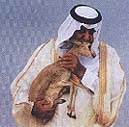 The Commission's research centres have already made their mark in captive breeding, reintroduction, and related research. The National Wildlife Research Centre (NWRC) at Taif has resulted in the reintroduction to wild conditions of the Arabian oryx in Saudi Arabia. Other native endangered species such as houbara bustard, onager and Nubian ibex are also being successfully captive bred at the NWRC. The King Khalid Wildlife Research Centre (KKWRC) at Thumamah is another component institution engaged in captive breeding, focusing on native gazelles. Furthermore, a new centre for gazelles, the Amir Mohammed Al-Sudeiri Gazelle Research Centre at Al Qassim is beginning to make its own valuable contribution to the captive breeding programme.
There has also been considerable progress with ecological work. Extensive surveys have been carried out and continue to be undertaken, with a view to filling gaps in the documented record of the Kingdom's flora and fauna. In addition, special studies on particular habitats and species are linked in to various conservation programmes.
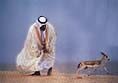
Confidence gained from the success of its Arabian oryx reintroduction programme has encouraged an expansion of reintroduction efforts by the NCWCD. Rheem and idmi are being reintroduced into protected areas situated within their former natural range, and studies are also underway for enhancement of houbara populations by releases from captive bred stock.
The oil-spill created during the recent Gulf conflict has been a test for the NCWCD's effectiveness. Participating in the emergency response programme, the NCWCD was instrumental in establishing a Wildlife Rescue Centre whose role was to save as many oiled birds, turtles and other animals as possible. Apart from the immediate task of cleaning oiled creatures and nursing them back to their full strength, so they could be released into the wild, the NCWCD team also worked on saving key habitats or restoring those that had already been heavily oiled. Amidst the devastation and despair engendered by the massive oil-slick, there have been moments of great joy and a sense of achievement. I think, for example, of Karan Island where, but for the conservation effort co-ordinated by the NCWCD, hundreds of green turtles would have died and many terns would have been struck down in their breeding season. Our biologists are continuing to work on problems created by the war's heavy toll of pollution and I am pleased to report that there are some good signs of habitat recovery.
 Environmental awareness programmes have formed a key element of our conservation policy. We are firmly convinced that informed public support is the backbone of conservation in the Kingdom and the strong interest in the Visitor's Centre for Environmental Awareness provides an index of the growing public awareness on environmental matters.
Conservation is not just a national issue and we are acutely aware of our responsibilities, both with regard to the Arabian region, and in the wider international sphere. The NCWCD played an active role in the United Nations Conference on Environment & Development (UNCED) held in Rio de Janeiro in 1992, and continues to take an active part in the international arena. As the global crisis resulting from resource depletion deepens, humanity has no alternative but to reconcile the objective of human welfare with the imperative of protecting the resource base. The Arabian historical experience is rich in models of such reconciliation and the challenge before us is to creatively apply the traditional wisdom in the new socio-ecological milieu. NCWCD seeks to play a central role in facing this challenge.
Arabian Wildlife. Volume 1, Number 1